Could a robot complete an entire open-water rescue on its own?
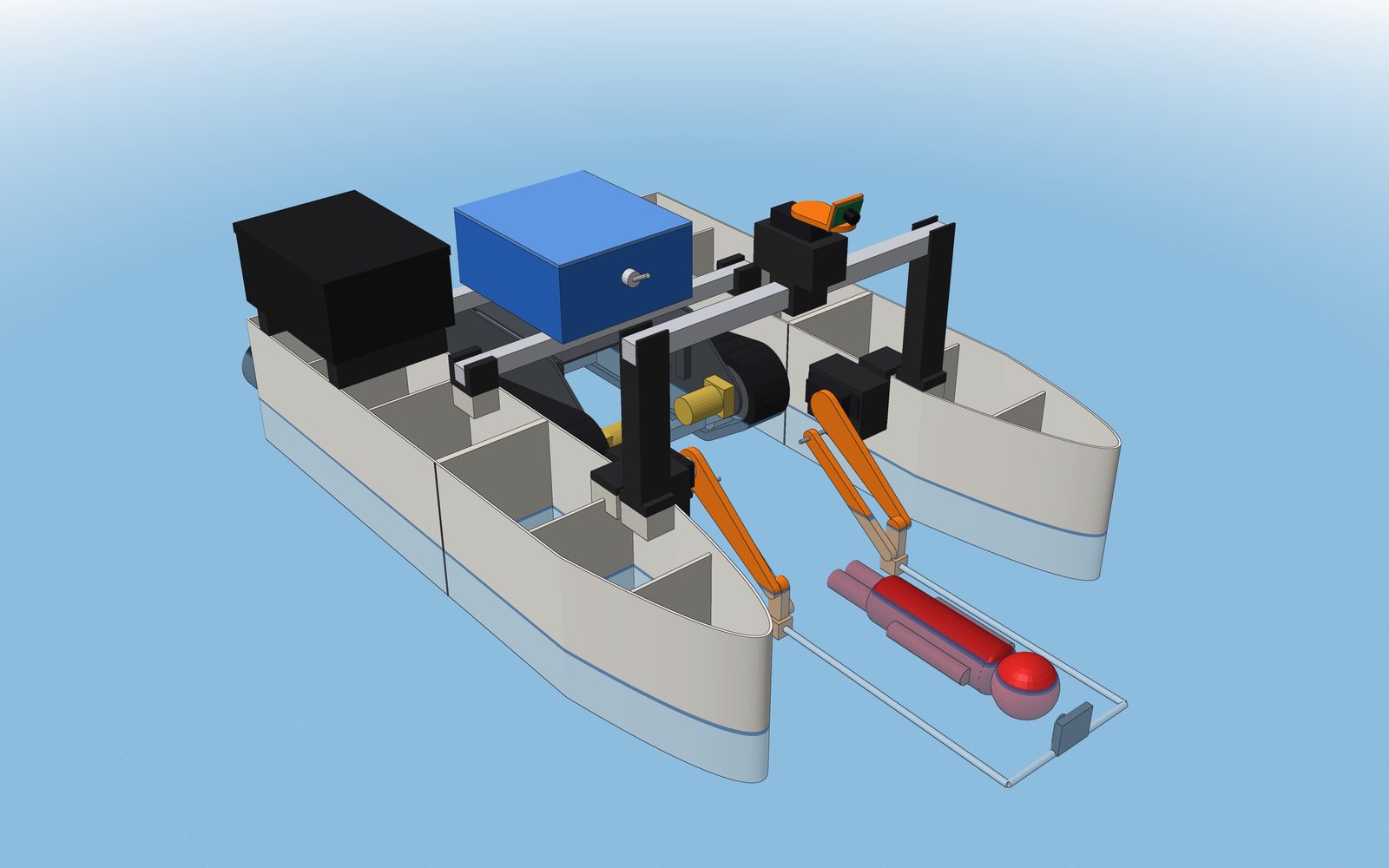
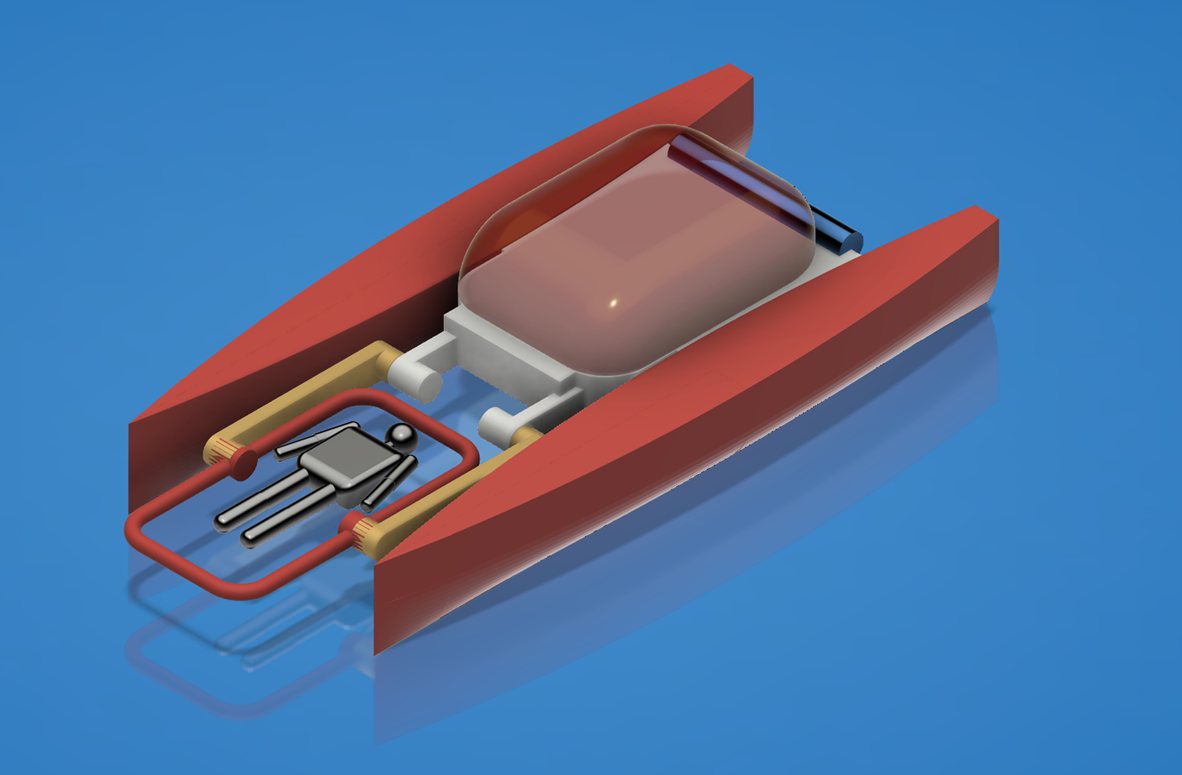
AmphiReach is an autonomous amphibious rescue vessel: it launches from shore, finds a person in the water by heat, lifts them aboard and drives up the beach to the paramedics. It exists as a paper, a simulation, and a small robot being built in Sofia.
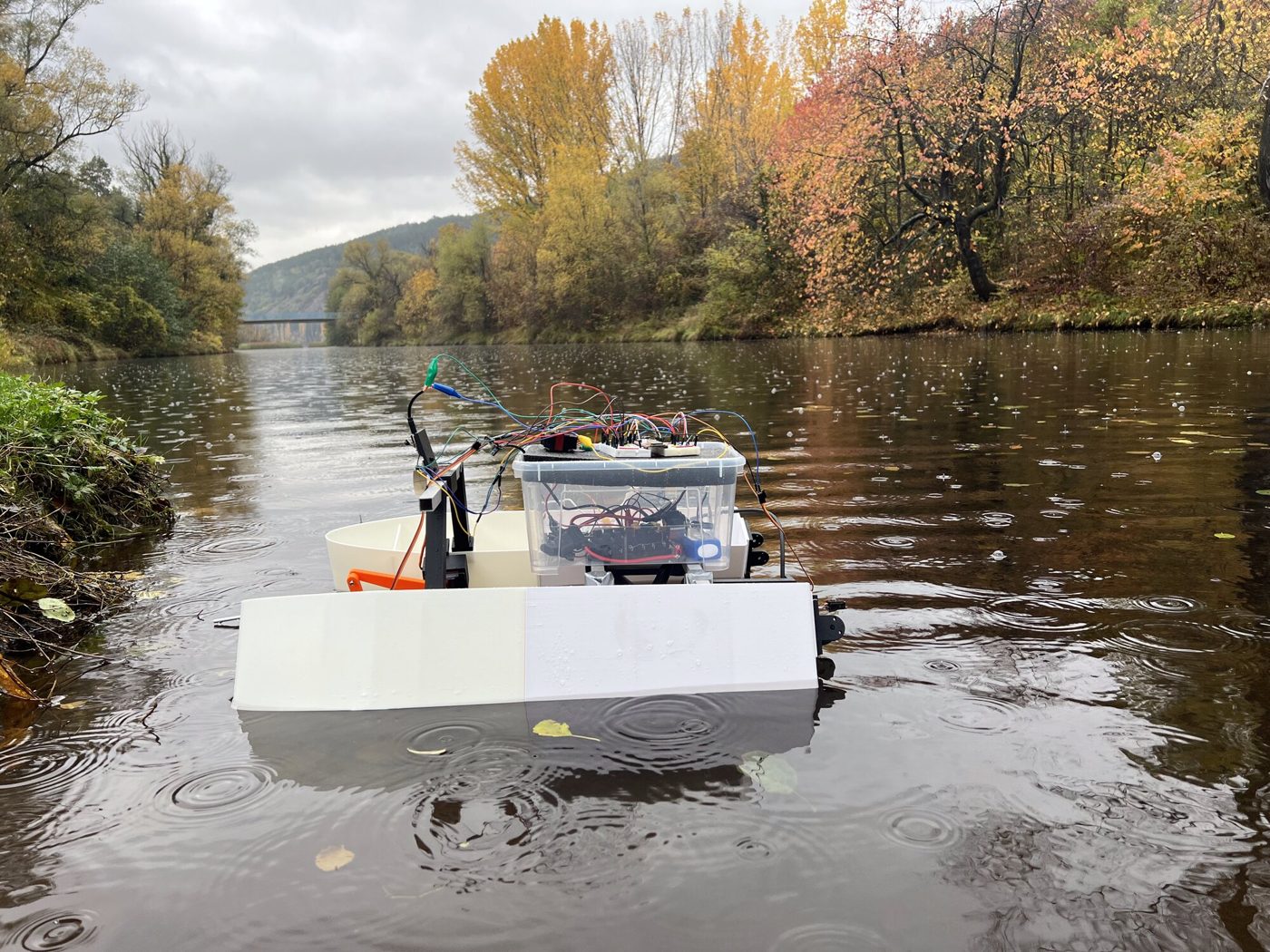
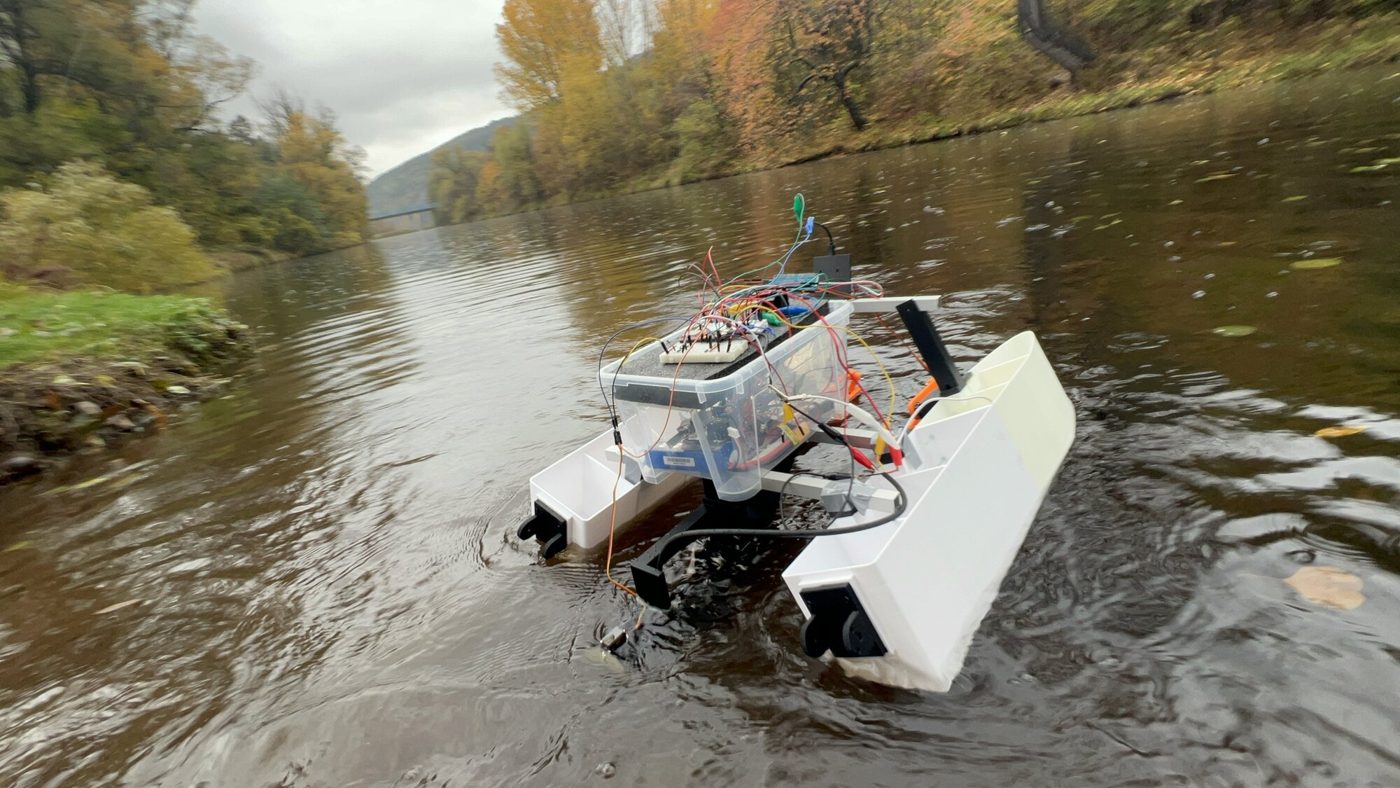
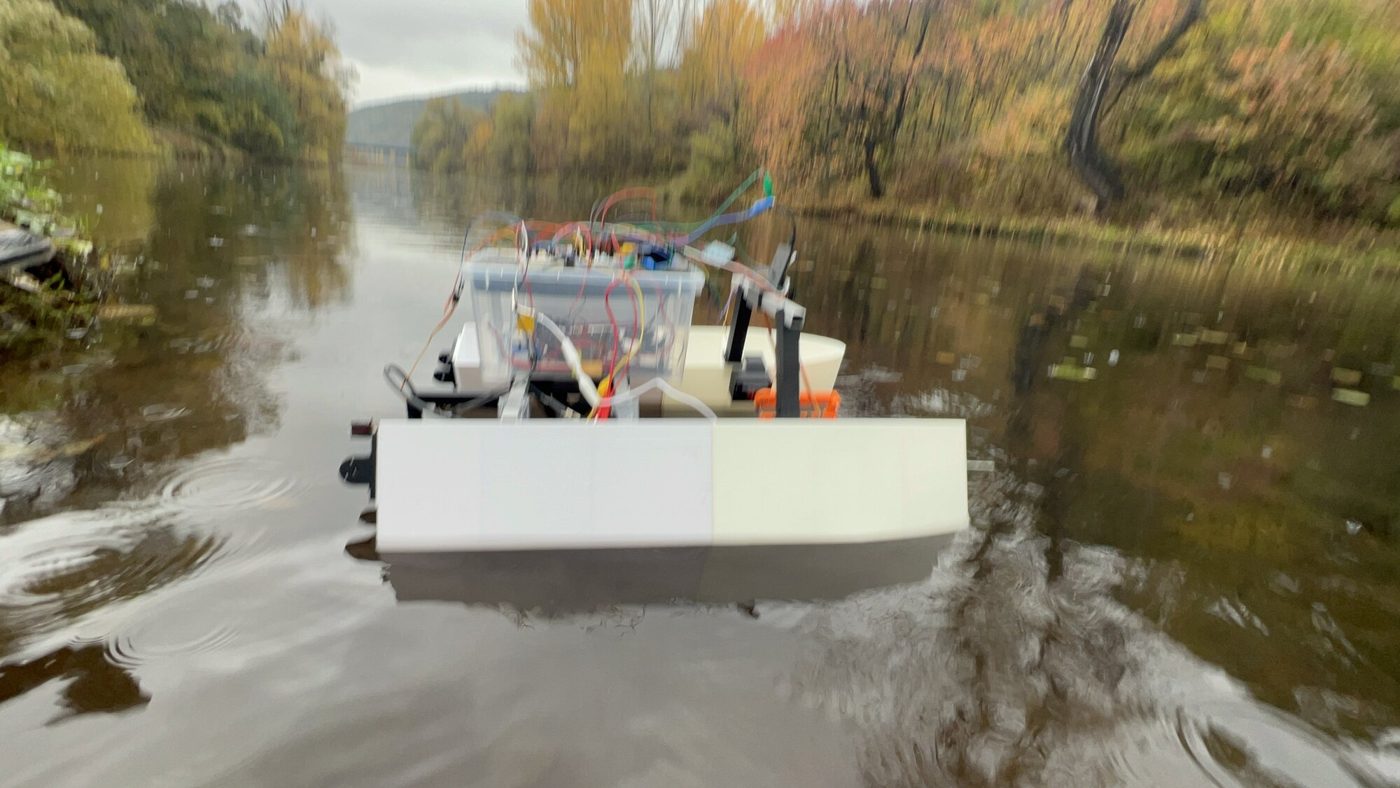
Pancharevo, rain and fog. The robot packed on the back seat at 07:38 with the box of boards on the beams; at the weir on the Iskar by 08:36, the launch spot a calm pool beside it. At 08:49 the first run on open water: held at the surface, set free, driven from the phone with one thruster and the rudder. It drove off, turned and came back to the bank, floating level in the rain. The camera on the arch recorded the whole trip from the car to the water, 11,764 frames. Mission done.
AR-Mini
Floating level in the rain, the box on the beams.Turning hard, the wake behind the thruster.Driving away, stern view: box, beam leg and rudder.
Driving and turning on the lake, 16 seconds.
Battery, a box of wiring, the first run without the bench supply
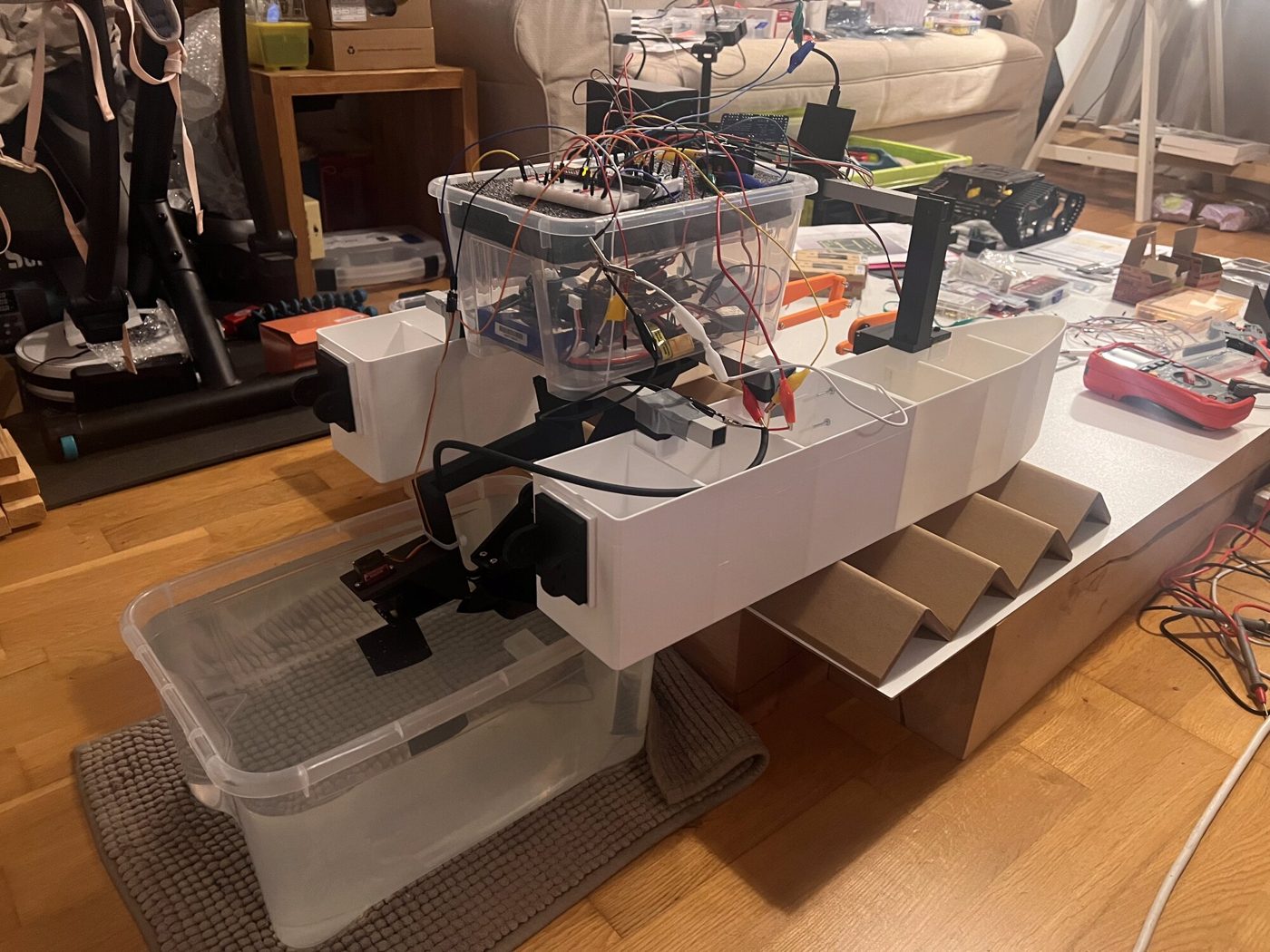
At 05:54 the 3S LiPo went on the charger inside a safety bag: balance charge at 2.2 A, full at 12.60 V after 34 minutes, 1212 mAh put back, all three cells at 4.20 V. Then the bench wiring was rebuilt from the breadboard into the final layout for the box: two boards with the controller across them, a 74HCT125 level shifter, the kill/run rocker, the battery through a 30 A inline fuse, the main switch and the fuse block, a buck for the 5 V; the divider resistor checked at 30.19 kΩ before it went in. By 11:30 the box sat across the beams with the breadboards on foam in its lid. The phone page after the first flash of the pool firmware: 12.91 V on the battery, link 187 ms; thruster, turn and one lift servo not yet working. At 14:04 the first run on battery: the thruster spun after one wire moved by a column. In the afternoon only one cradle servo followed the lift slider, still being chased. At 17:47 the robot went across a clear storage box of water: thruster nozzle and rudder blade under water, the servo above the waterline, and with the rocker on run the phone sliders drove thruster and rudder in the water.
AR-Mini
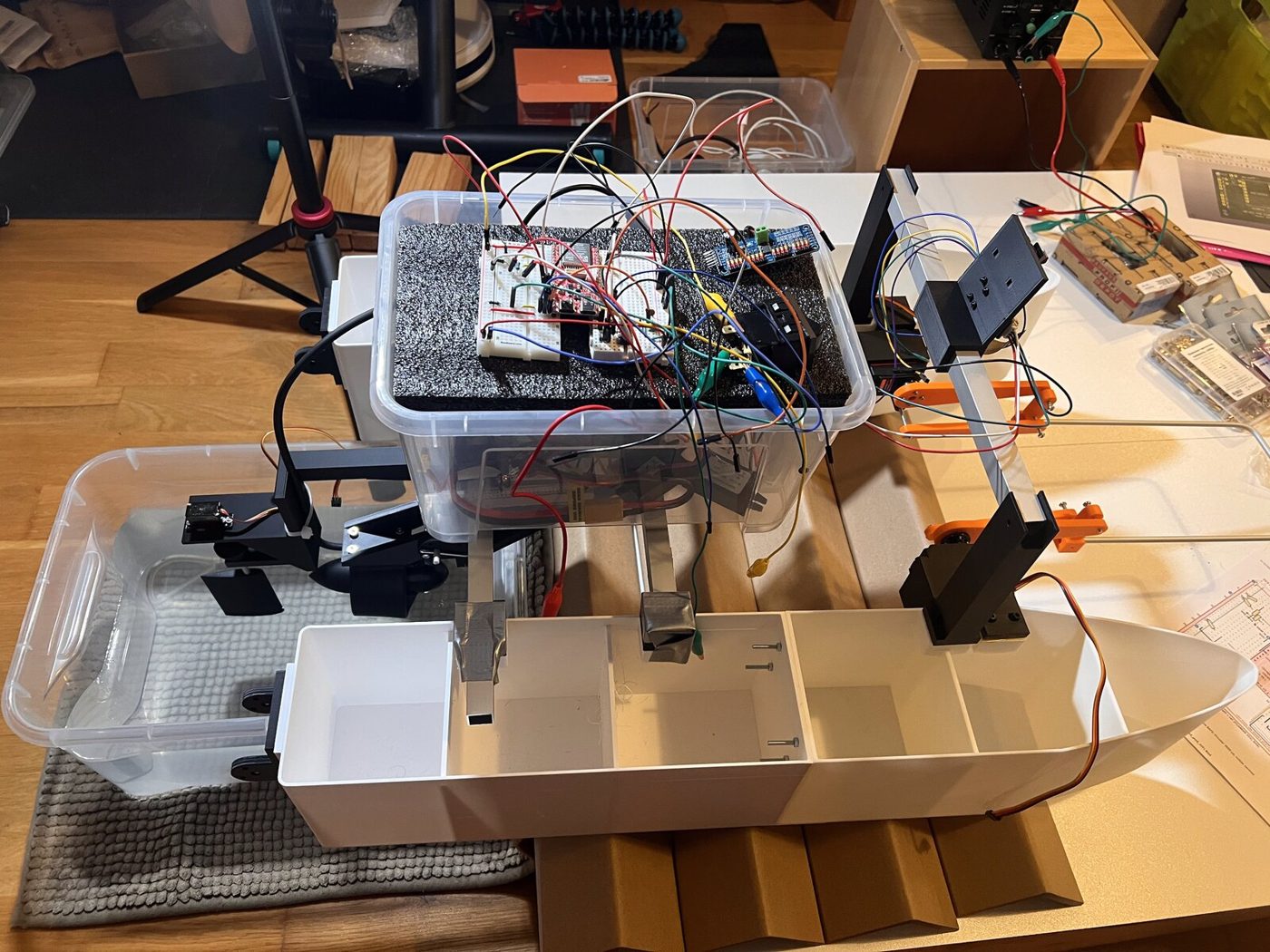
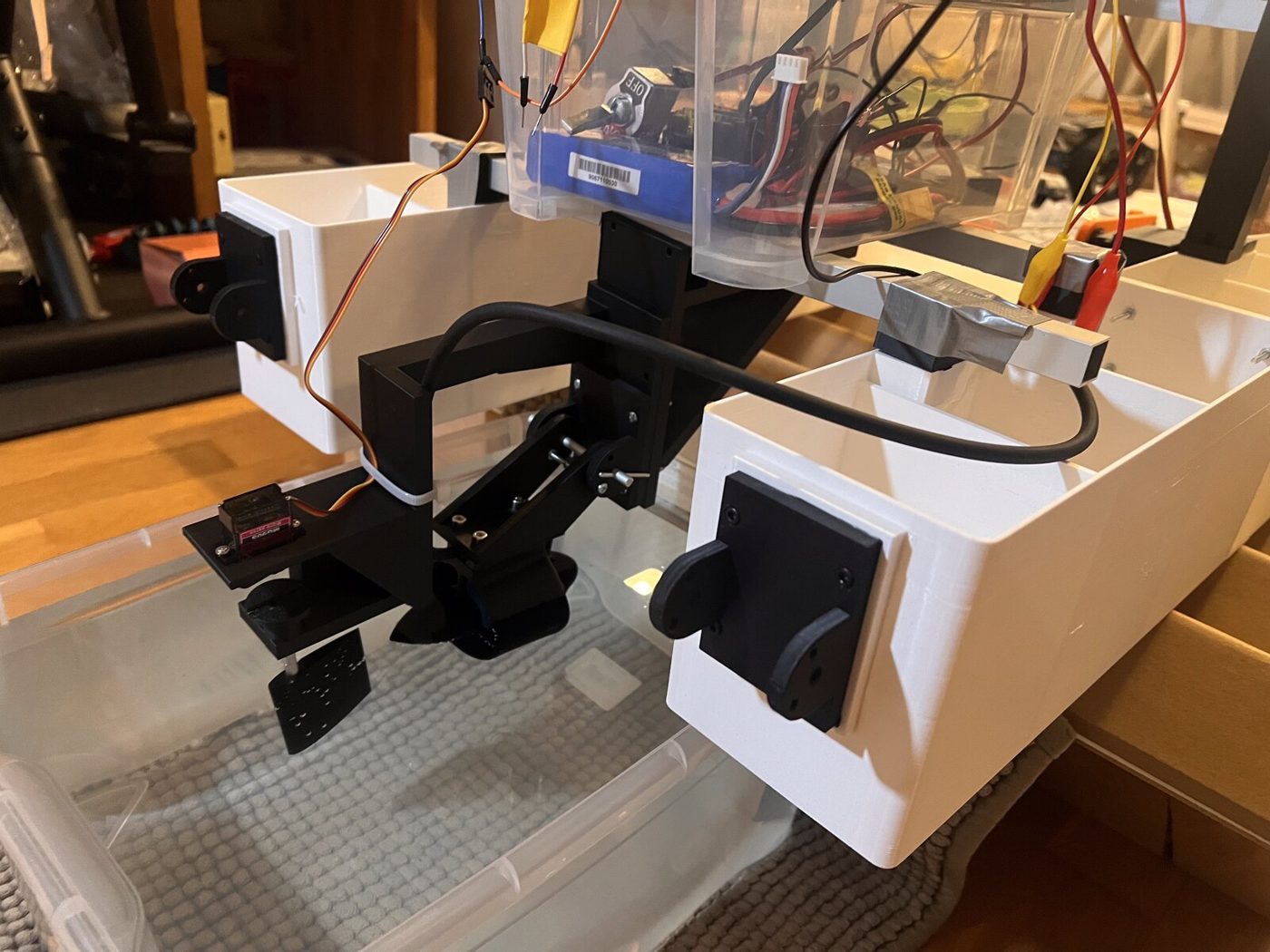
The robot with the box on the beams, beam leg, thruster and rudder.Beam leg, thruster and rudder blade, close.The water box: the whole robot on its hulls, thruster and rudder in the water, breadboards lit in the box lid.
The water box: rocker on run, the phone sliders drive thruster and rudder.
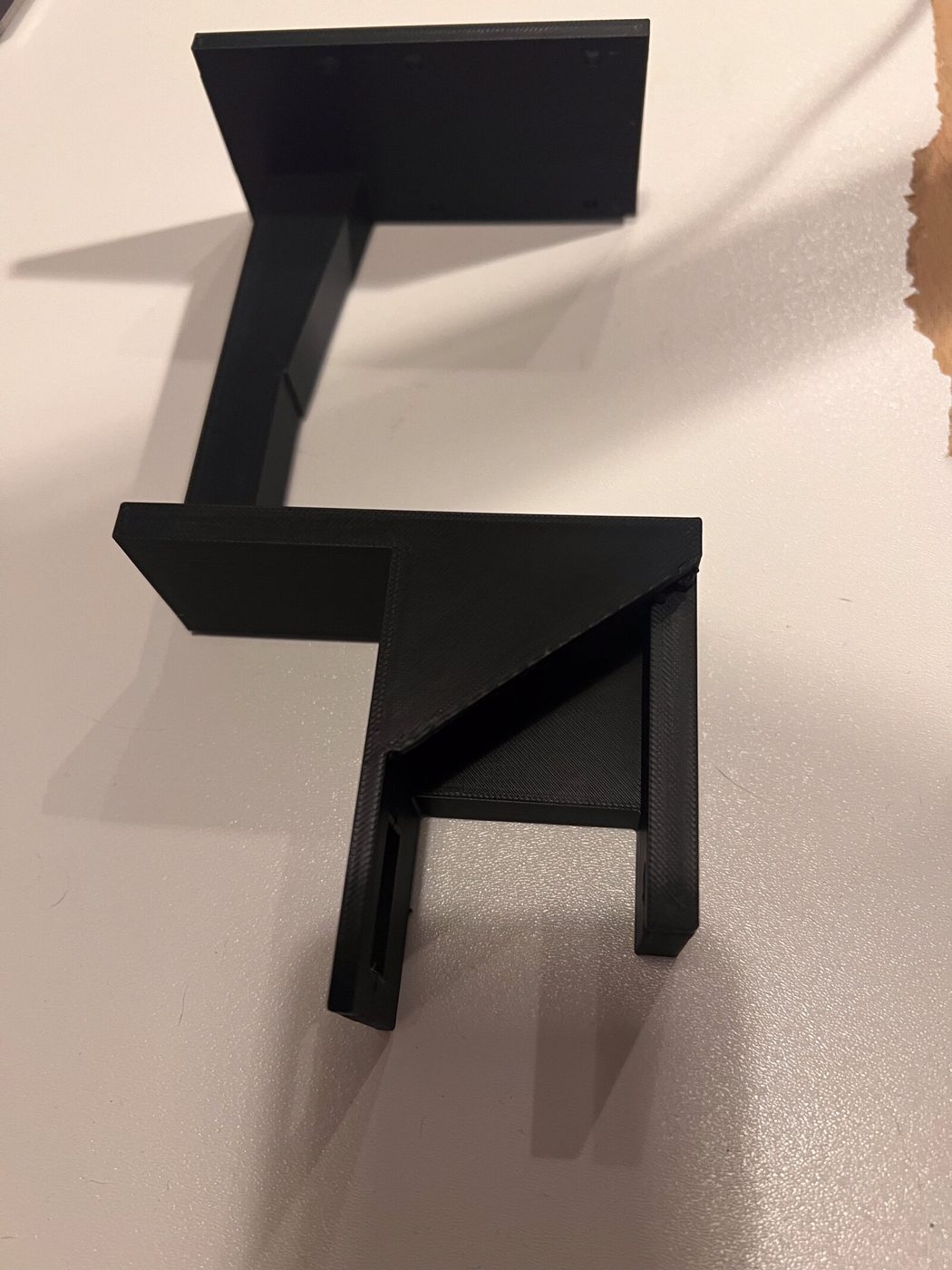
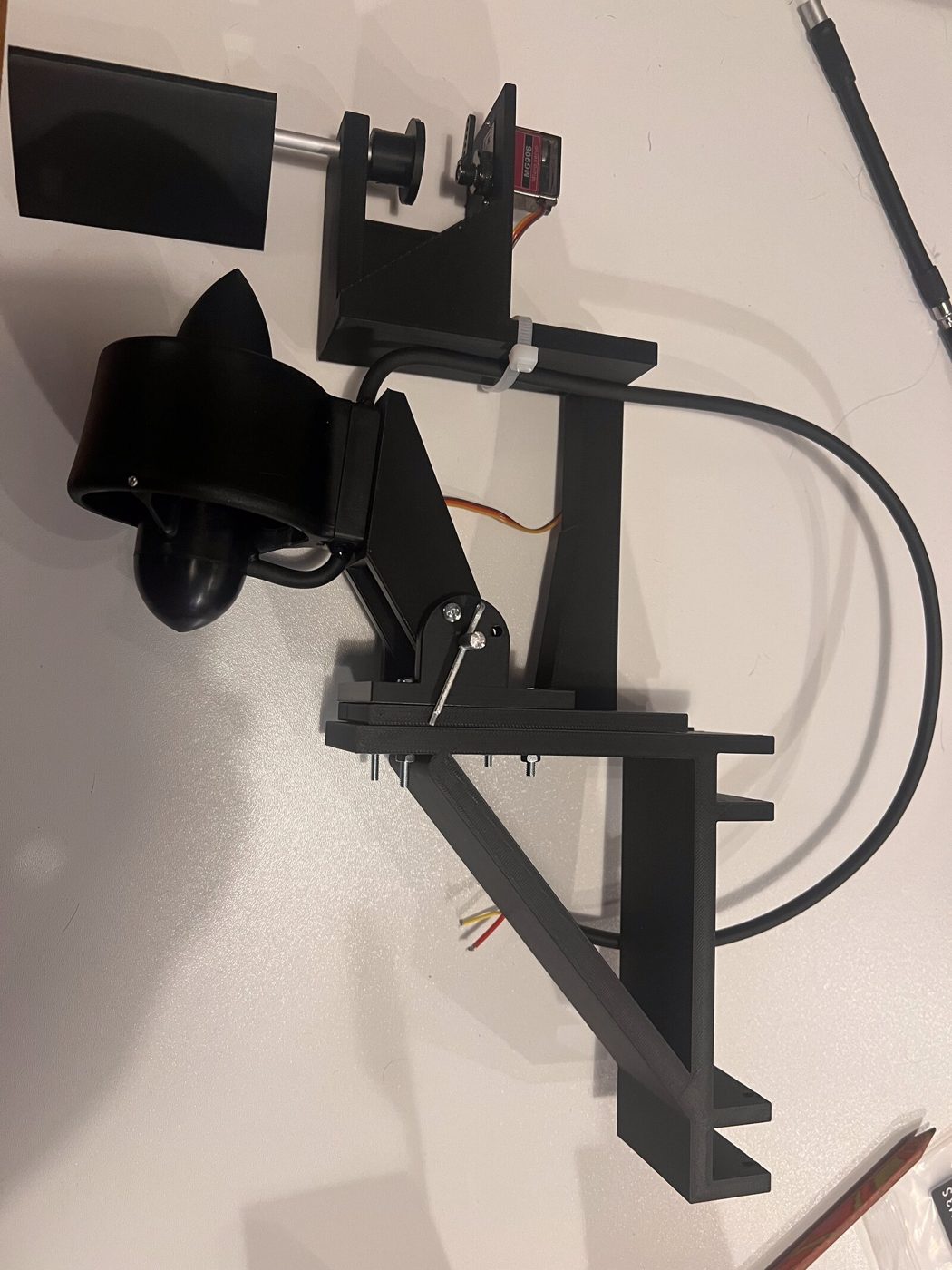
Rudder assembled
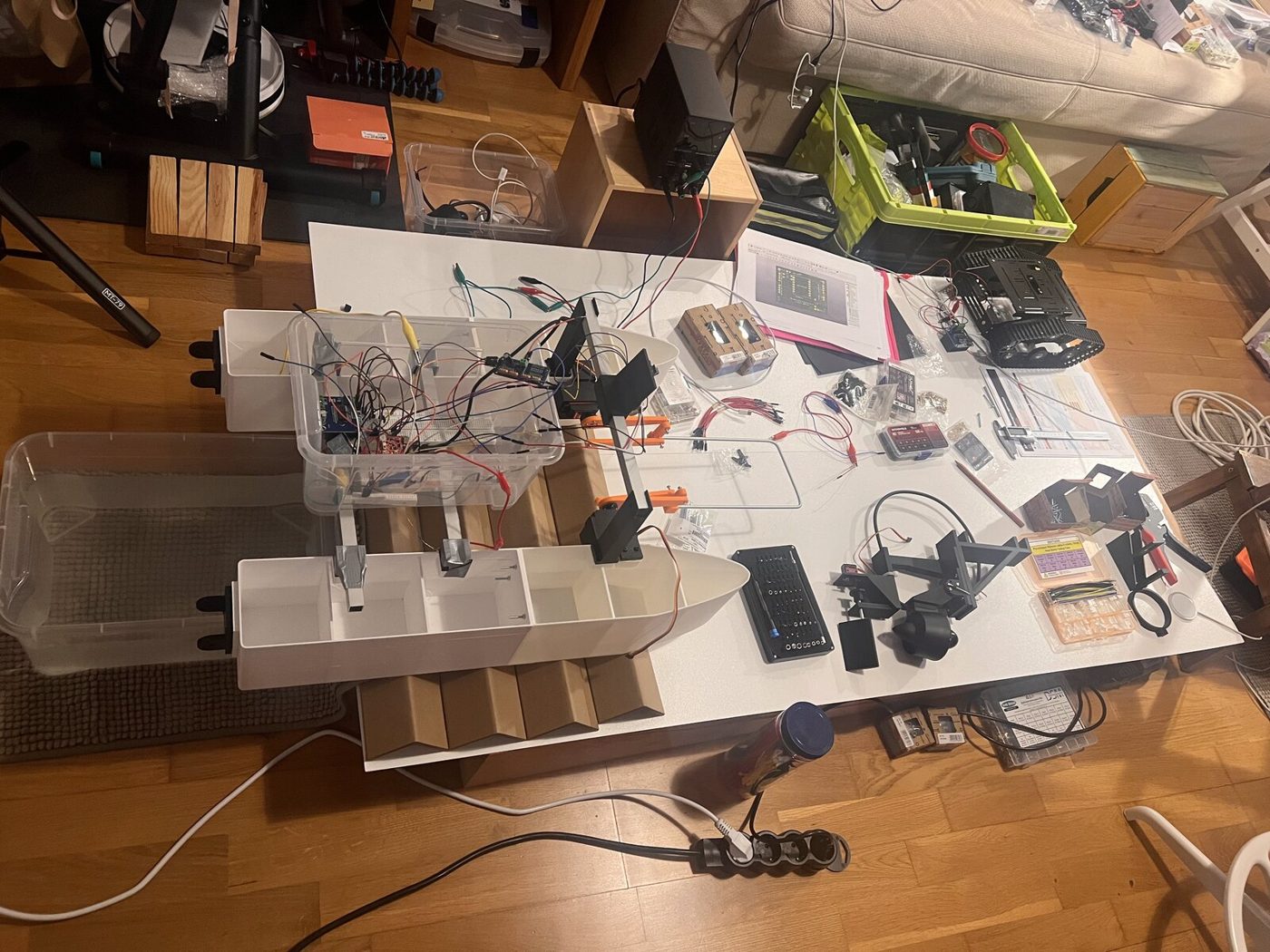
The rudder frame came off the printer at 06:18, 2 h 27 min and 104 g: a plate between the beam leg pad and the thruster bracket, a boom over the thruster, a post with the bearing and the servo seat. The Ø5 stock drilled in the vice; by 11:44 leg, frame, bracket, thruster, servo and blade were assembled on the table. By the afternoon the whole robot stood with the food box on the beams and the tracked chassis off.
AR-Mini
The rudder frame off the bed: plate, boom, post, servo seat.Assembled: leg, frame, bracket, thruster, servo and blade.The robot with the box on the beams, the tracked chassis off, the rudder assembly beside it.
Printer timelapse: the rudder frame.
Who is behind this
AmphiReach is the work of Teodora (Teddy) Kyoseva, a high school student in Sofia, Bulgaria. The research was done with mentor John C. Hood through Horizon Academic. The physical robot is built at home.